When I purchased the Aurora development site in 1996, the first decision was whether to create a standard, low-cost residential building—the “square box with flimsy balconies” style—or to develop something remarkable, a building that would truly stand out in the market.
Building A Dream by John Sage
For residents of the Aurora, this development represents more than just an apartment building. It is a place to call home, to host friends, and to enjoy life in a space that reflects individuality and comfort. A home, in my view, always communicates who we are as people and shapes the way we live.
The two sites that form the Aurora were acquired on 22nd October 1996, a bold move at a time when the residential property market was recovering from the interest rate spikes of 1994–1995. St Kilda Road was then largely commercial, making this decision both daring and visionary.
The key question was whether to follow the common trend of cheap, generic apartment blocks or to push for a design that offered real value and an exceptional living experience. Many developers focused solely on affordability, resulting in bland, uniform apartments that lacked character and comfort. I felt such an approach was inappropriate for a location of such significance.
At this stage, I had the opportunity to collaborate with one of Australia’s finest architectural designers, Nigel Fitton. Together, we committed to designing a building that would be high-quality, innovative, and, most importantly, a joy to live in. Our aim was a structure that combined elegance, comfort, and functionality, elevating it above the typical residential developments of the era.
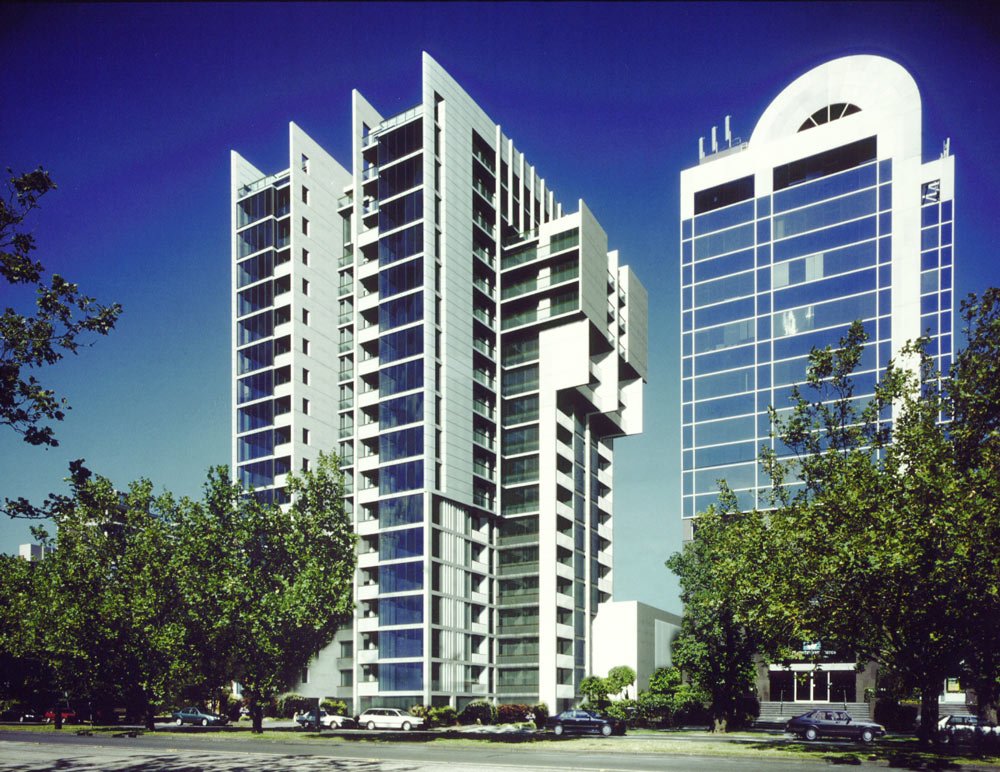
The Aurora features larger-than-usual balconies, integrated into the floor plates rather than hanging off the edge. This design allows residents to enjoy outdoor living without the discomfort of harsh winds or the insecurity commonly found on standard balconies.
Air conditioning was installed via a central plant, avoiding the common low-quality solution of individual balcony units. Every detail of Aurora’s design was carefully considered to ensure a superior living environment that balances luxury and practicality.
A central consideration in creating a building of this quality was the construction method. Unlike many developments that use tilt-slab construction—resulting in smaller windows, uniform apartment layouts, and reduced design flexibility—we adopted open-engineered commercial construction.
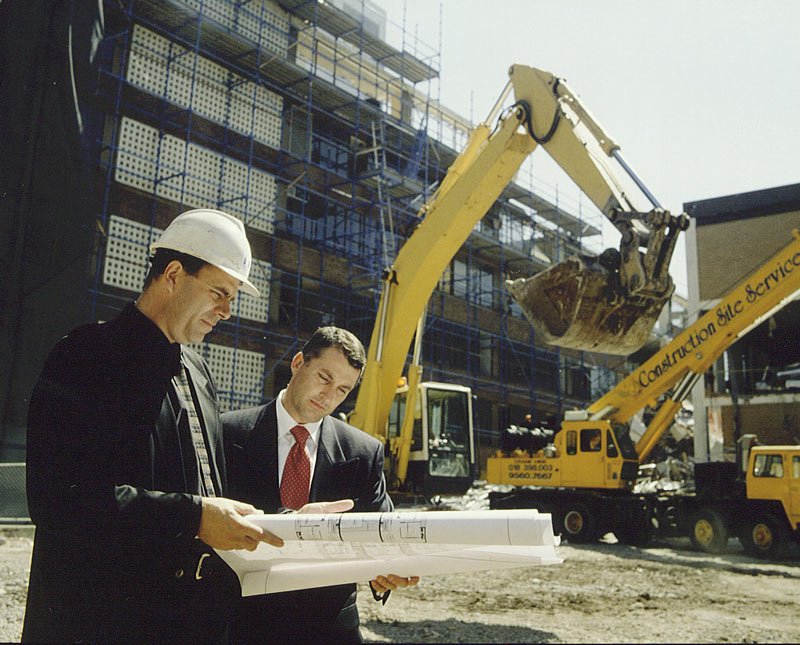
John Sage adopted open-engineered commercial construction for the Aurora
This construction technique, built around a central lift core with concrete columns and post-tensioned slabs, enabled flexible internal layouts, larger living spaces, and expansive floor-to-ceiling windows. It also allowed each apartment to enjoy unique views and a greater sense of individuality, creating what I call a “vertical village” rather than a standard apartment block.
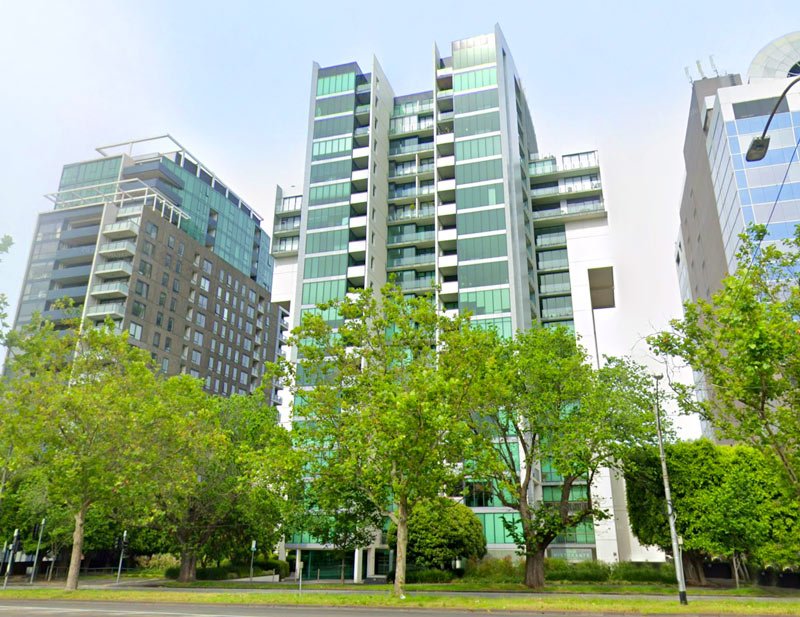
With the Aurora building, we decided that we wanted design flexibility, to allow larger rooms, especially the open living rooms, large wall-to-wall and floor-to-floor windows and a much greater variety of apartment sizes. It’s more like creating a vertical village, rather than the typical apartment building. This design flexibility required a different type of construction technique for the vast majority of “square boxes’ built around Melbourne.
Many subtle design choices set Aurora apart. For example, while most buildings of similar height contain 20 storeys, Aurora holds only 19 floors. This was to allow higher-than-standard floor-to-ceiling heights, enhancing the sense of space and liveability in every apartment. These choices reflect our commitment to creating a building that feels exceptional, both inside and out